Before we talk about leads and avatars, let’s get the big picture straight.
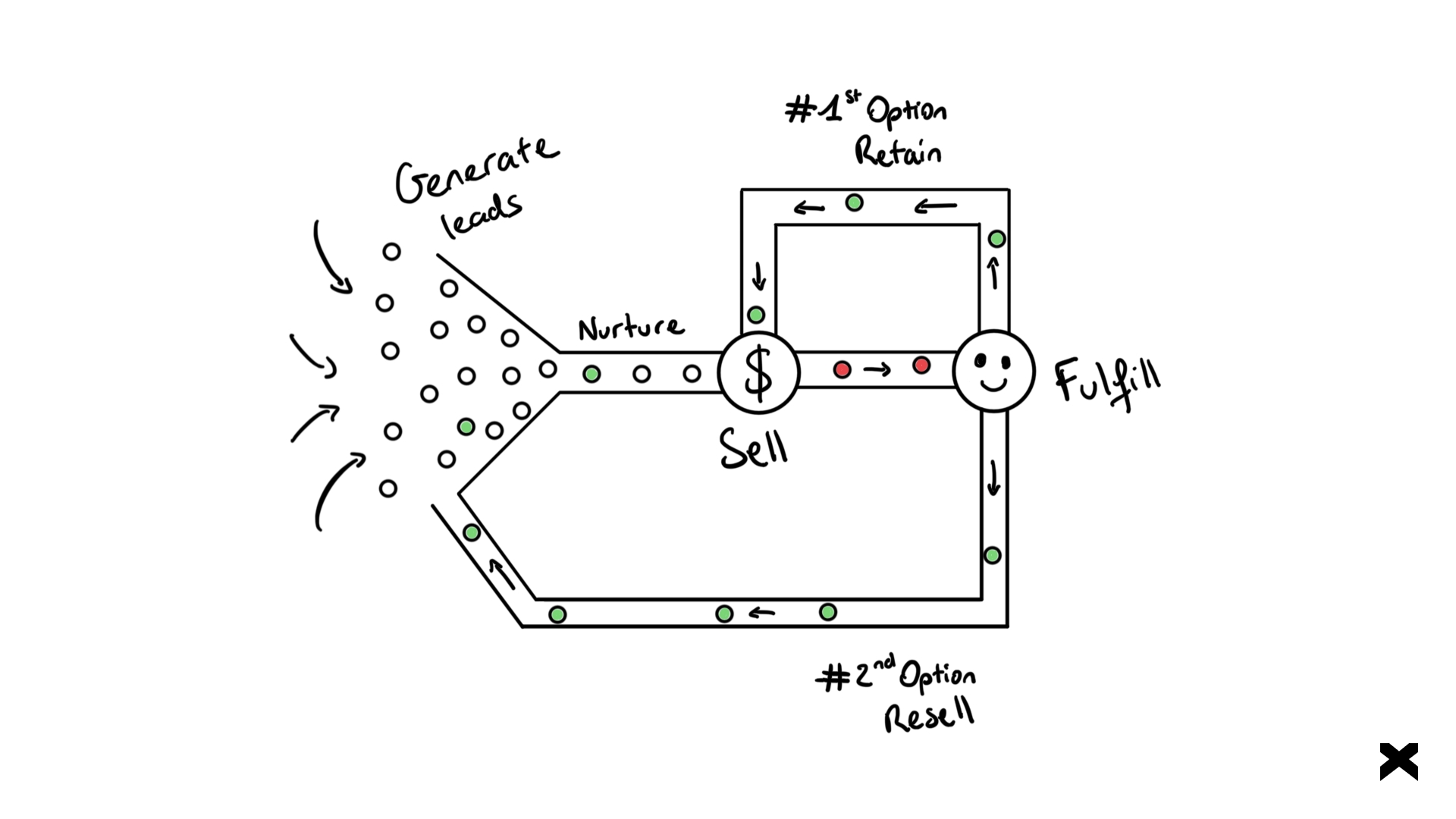
Any business that wants to survive in a capitalist world has to master 5 things:
- Generate leads: Get people you can contact in the door.
- Nurture/Engage them: Give them enough value that they start trusting you and wanting more stuff.
- Sell: Help them make a clear decision to buy from you.
- Fulfill: Deliver what you promised (this is where most businesses quietly die).
- Retain or Resell: Either keep them paying or get them to buy more.
Here, we’ll focus on the first two parts: generating leads and turning them into engaged prospects.
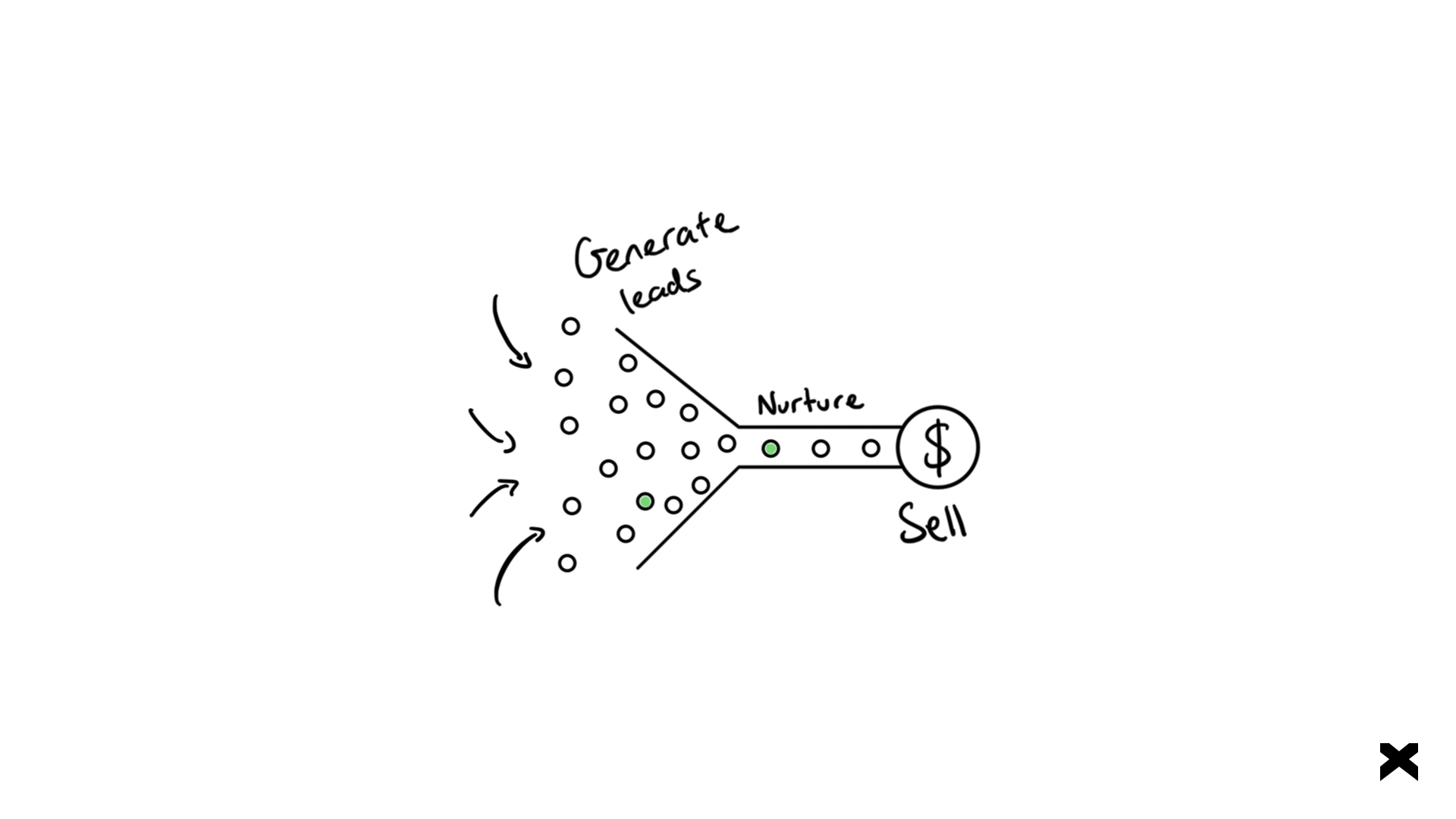
Everything else depends on this.
Simplest Definition of “What Is a Lead?”
A lead/prospect is someone you can contact.
You either already have their contact information (email, phone, LinkedIn, etc.) or you can realistically get it. That’s it. Nothing magical.
But there are different kinds of leads, and this is where most people get confused.
Cold Leads
A cold lead is someone you can reach who has no idea who you are.
Example: A random entrepreneur you found on LinkedIn. You’ve never spoken to them. They don’t follow you. They don’t know your name or your work. They’re a complete stranger.
Warm Leads
A warm lead is someone you can reach who already knows you (even a little).
Examples:
- Your grandma
- An old friend
- That guy you met once at an event who accepted your LinkedIn connection
- A former colleague
They know you exist. That’s the difference.
But just because someone knows you doesn’t mean they’re interested in what you’re selling.
Your entrepreneur friend might be a warm lead (he knows you personally), but if he has zero need for your offer right now, he’s not engaged. He’s just your friend.
Engaged Leads
An engaged lead is a lead, cold or warm, who has shown real interest in your offers.
They took an action that proves they’re paying attention:
- Replied to your message with a real question
- Downloaded your free guide
- Booked a call
- Asked how you could help their business
- Engaged meaningfully with your content
This is the shift that actually matters.
Your entire job in the beginning is to move people from cold to warm to engaged.
Cold → Warm → Engaged
The Real Goal: Give Value Before You Ever Ask for Money
- Your leads have problems.
- Your business exists to solve some of those problems.
But nobody wakes up excited to “buy your coaching” or “buy your service.”
They wake up wanting their specific problem to go away.
That’s when your core offer comes in:
You solve their problem with your offer in exchange for money.

But most people don’t want to trade money for your offer if they don’t trust it will solve their exact problem exactly the way they want it solved.
So, some business people came up with a great idea:
Providing value before even asking for money to build influence through power, status, credibility, and likeness.
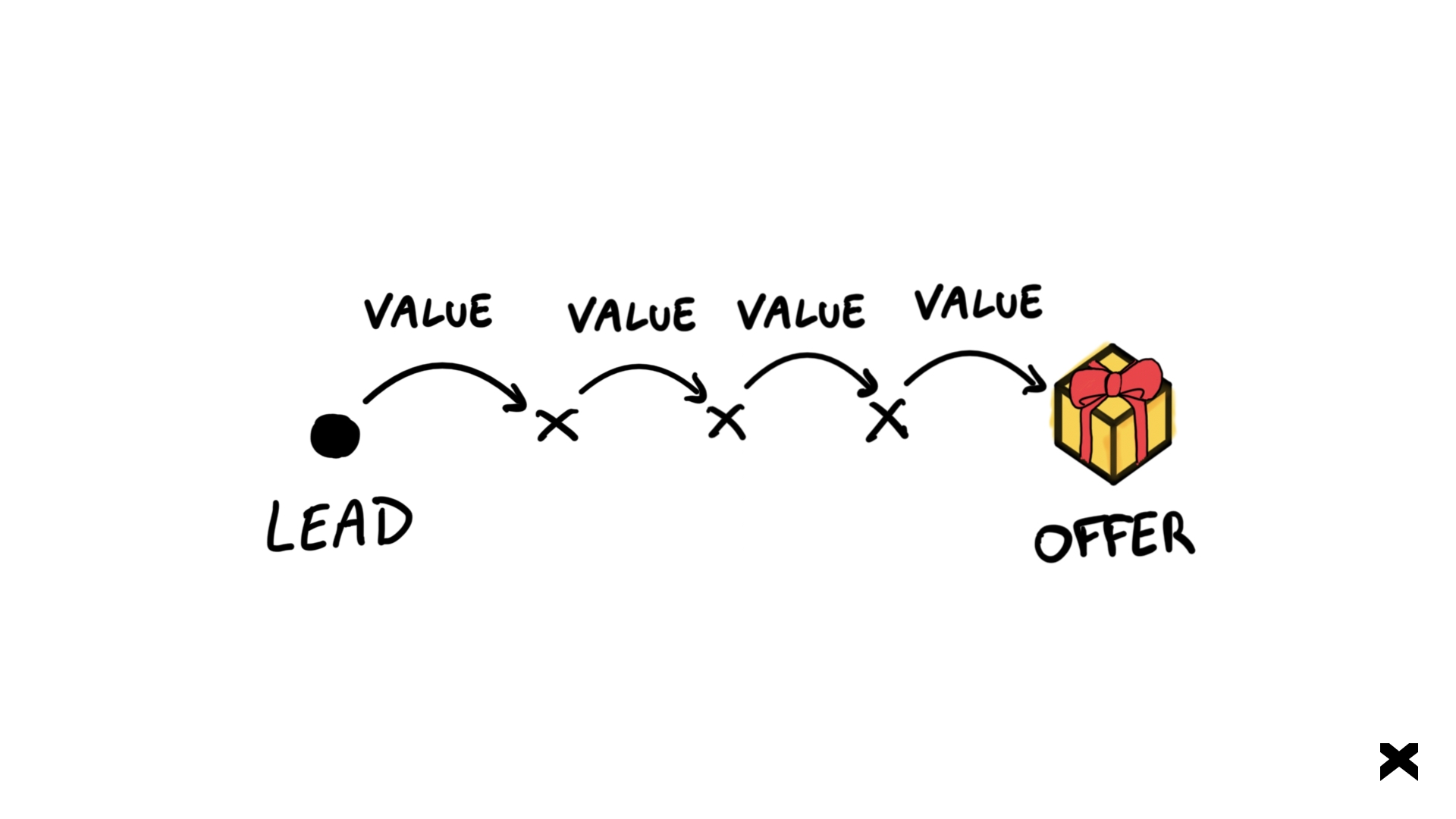
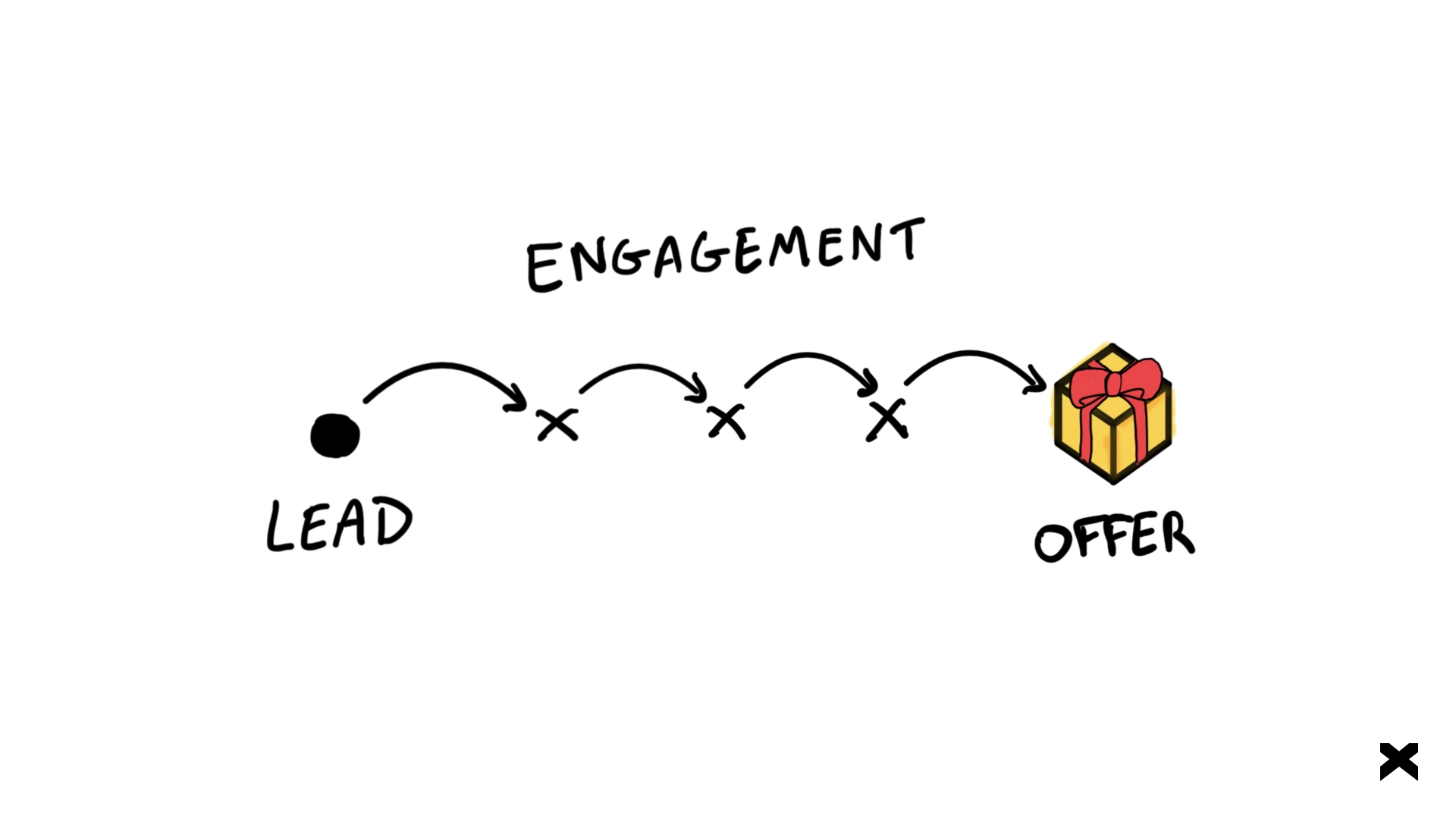
So the game is simple, give them value first:
- Help them solve a small piece of their problem for free.
- Let them experience what it’s like to use your stuff.
- Only then do you offer to help them with the full thing.
And that’s why lead magnets exist.
What Is a Lead Magnet?
A lead magnet is something free you give away that helps your lead make progress on their problem immediately.
Classic examples:
- A PDF checklist
- A Notion template
- A mini training video
- A free audit
- A swipe file
It does 3 jobs at once:
- Delivers real value right now (builds trust and goodwill)
- Acts as a filter (only people who actually have the problem will bother to opt in)
- Reveals the next part of their problem
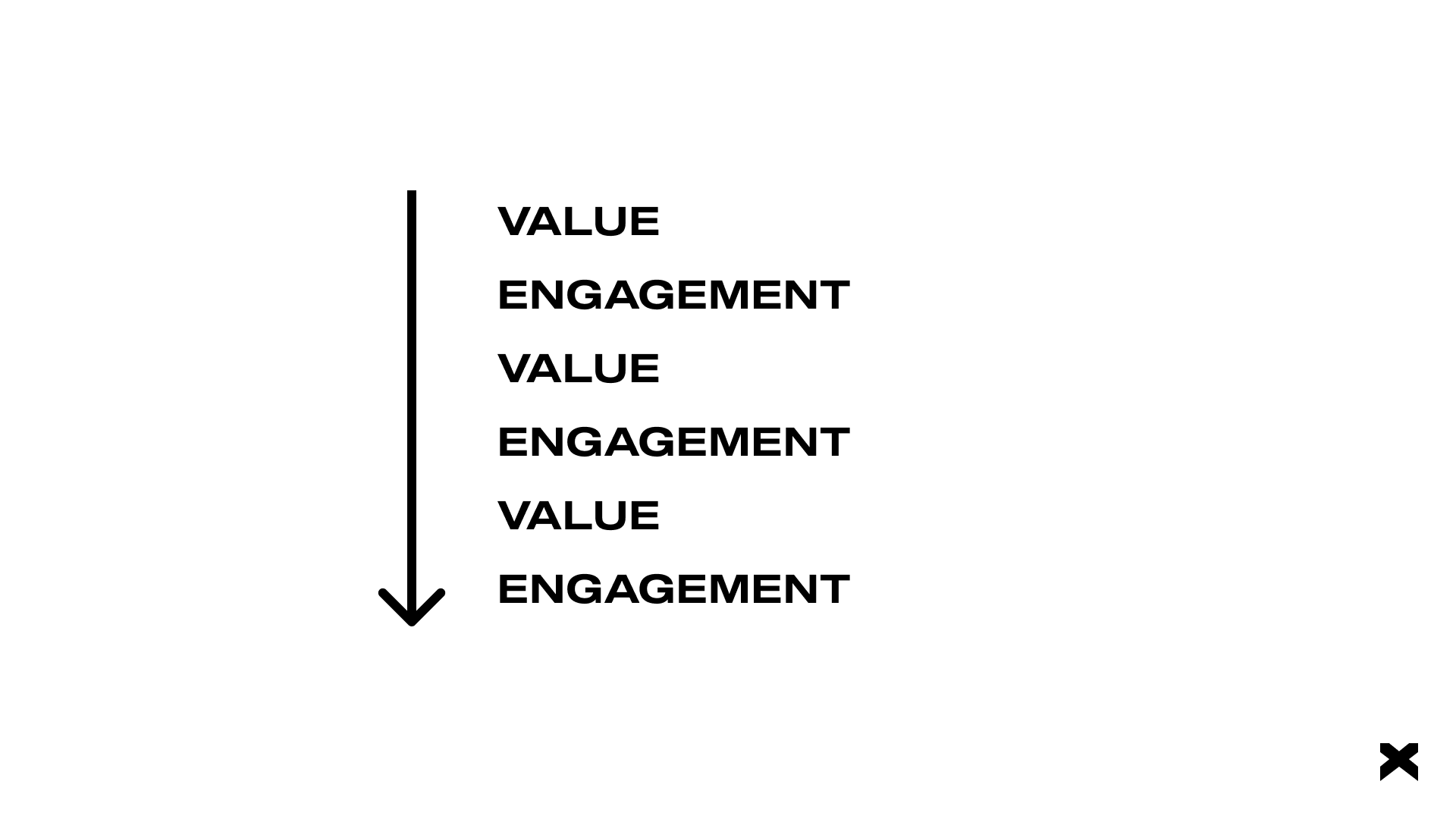
You keep distributing value through content, conversations, and more free resources until the lead has received enough value that the next logical step is obvious:
“Okay... I want THIS person to help me with my problem.”
That’s when they’re ready for your paid offer.
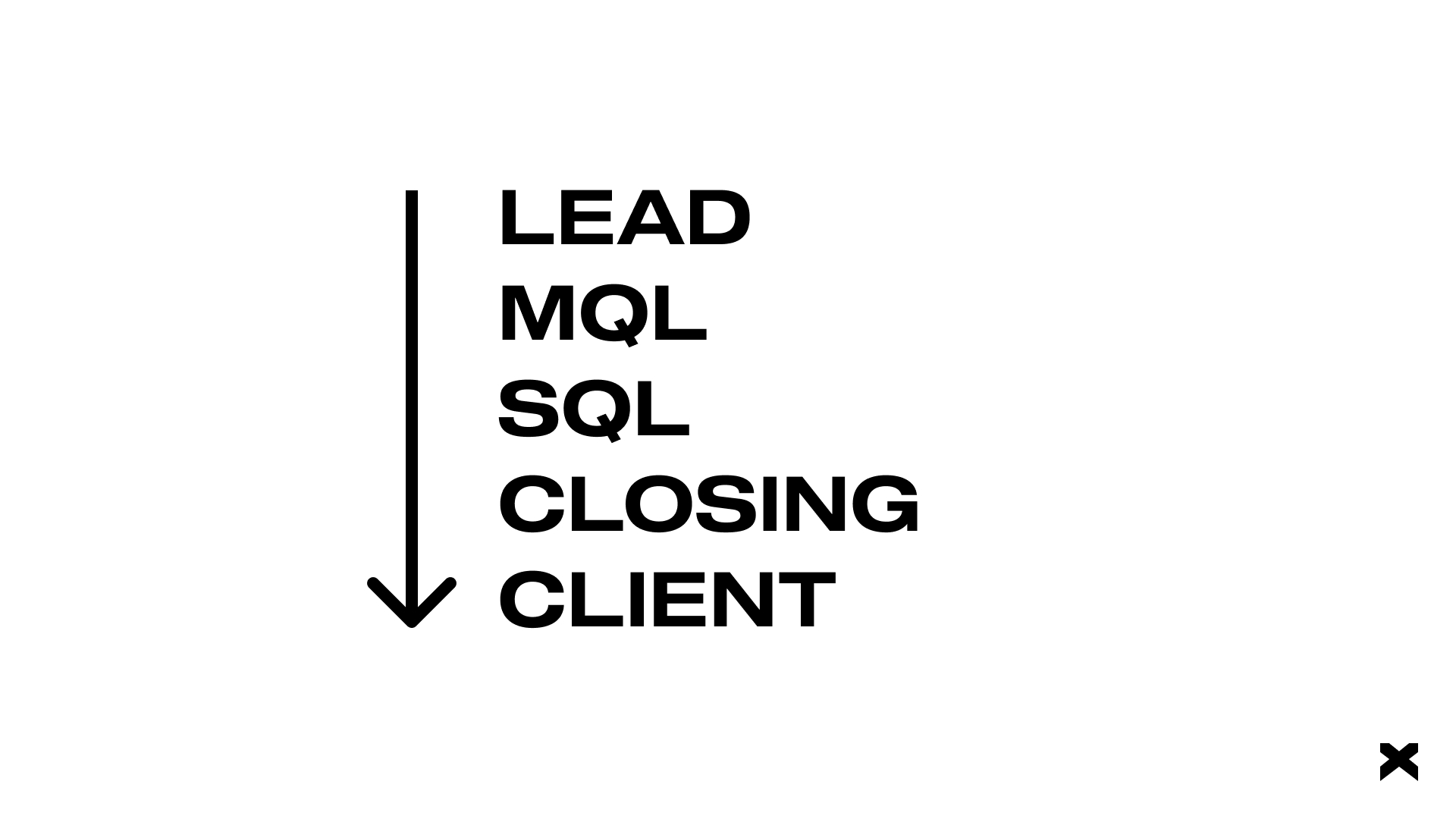
MQL → SQL → Closing: Turning Strangers Into Buyers
These three acronyms are just fancy names for stages in the process of moving someone from “not engaged” to “engaged”.
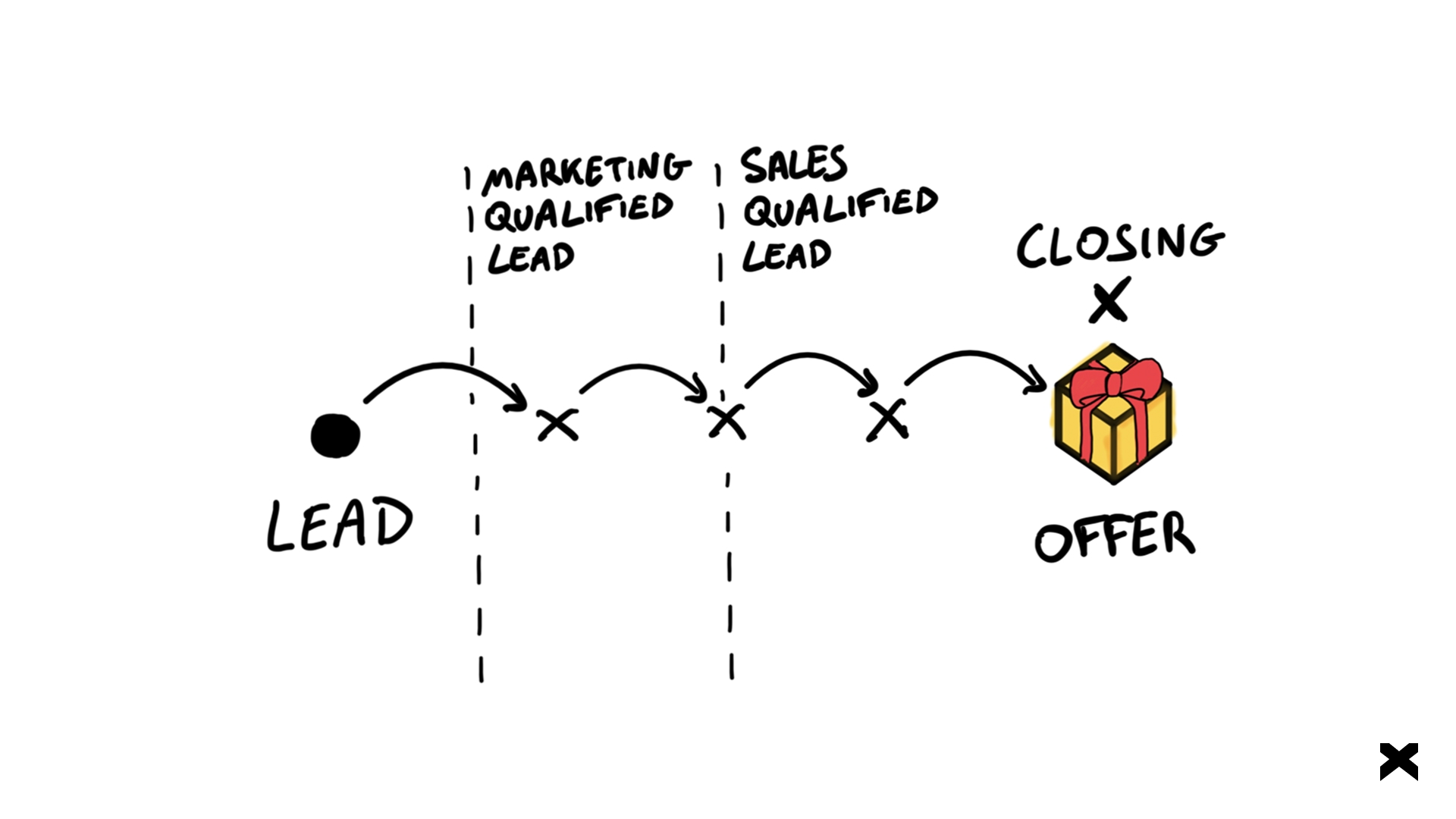
MQL (Marketing Qualified Lead)
Marketing: Letting people know your stuff exists.
This is when you tell people your stuff exists and they engage with the value you deliver at this stage.
It’s not necessarily public. It’s you letting them know about your stuff and them engaging with what you just shared.
Example: They read your blog post. Watched your YouTube video. Downloaded your lead magnet. Replied to your LinkedIn post. Commented with a real question. Answered your email marketing campaign, etc.
Marketing’s job is done here. This person is no longer completely disengaged. They’ve raised their hand and shown some interest.
SQL (Sales Qualified Lead)
Sales: Helping people make the best decision for their needs.
This is when you, a salesperson, or an AI agent, have a conversation with them to guide them through your stuff.
You dig deeper. You understand their specific situation, real problems, budget, timeline, and decision-making process. You confirm they’re a good fit and genuinely interested.
Only after this stage do you have a real sales opportunity.
Closing
This is the moment you help them make the best decision for them.
It’s not manipulation. It’s not pressure. It’s a clear, honest conversation about what you can do for them, what it will cost, what happens if the leads stay where they are, and whether they want to move forward.
If they say yes → they become a client.
If they say no → either they weren’t ready or it wasn’t the right fit.
Either way, you were useful in helping them decide.
Your Market: A Giant Schoolyard
Most people think of their “market” as some vague, endless sea of potential customers.
That’s useless. Instead, picture a big schoolyard at recess.
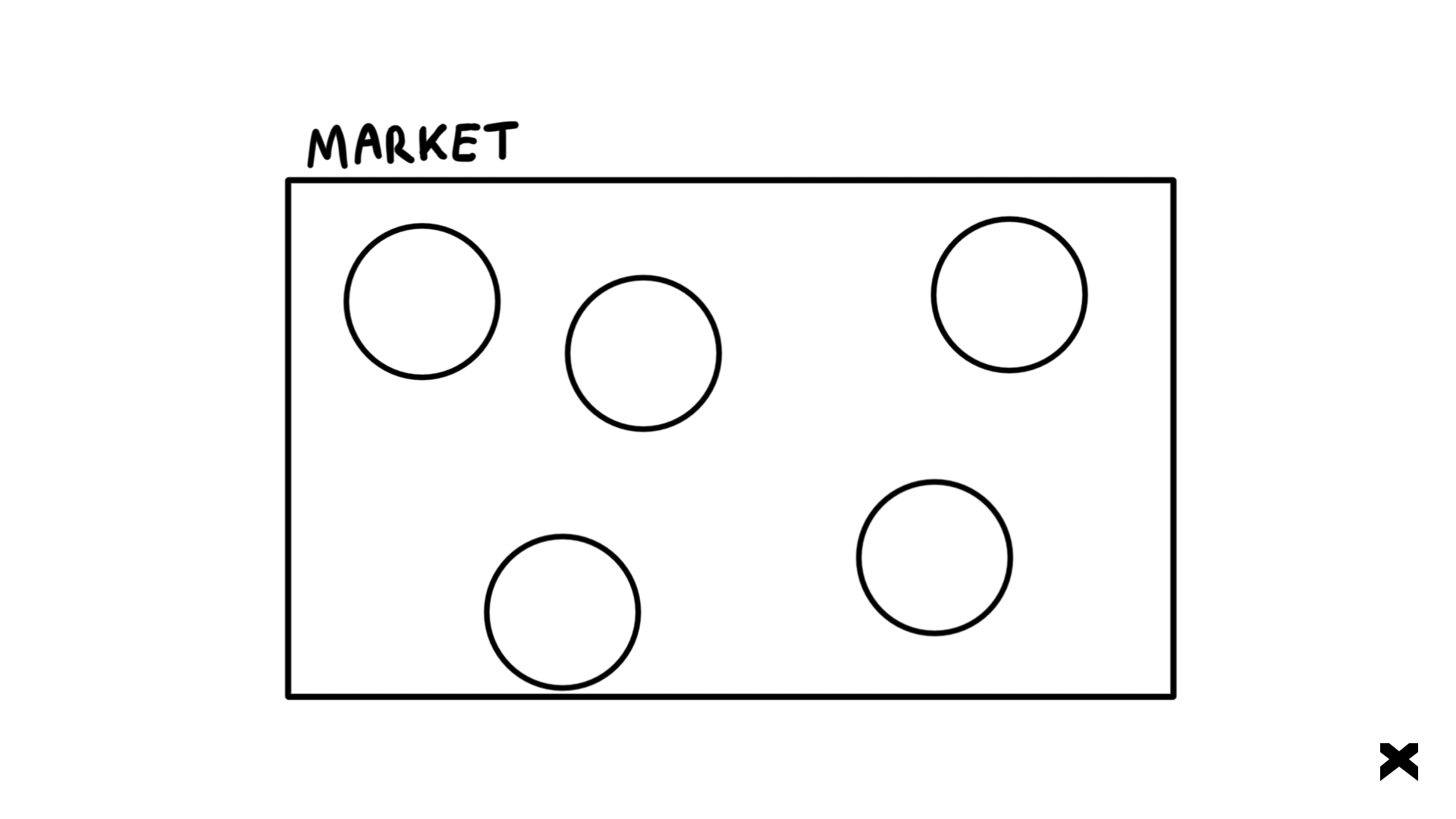
Inside that schoolyard, there are different groups:
- The sporty kids over there
- The gamers in that corner
- The artists near the benches
- The bootstrapped e-commerce founders comparing notes
- The funded SaaS startups talking about their last round
- The service business owners who just hit 500k revenue and are losing sleep over hiring
Your job is not to sell to the entire schoolyard.
Your job is to figure out “Which group can I help the most?”
Which group has problems that your solutions solve extremely well?
That group is your focus. Everything else is noise.
ICP: Ideal Customer Profile (The Group You Should Actually Target)
An ICP (Ideal Customer Profile) is the specific type of business (or person, if you’re B2C) that you can create the most value for.
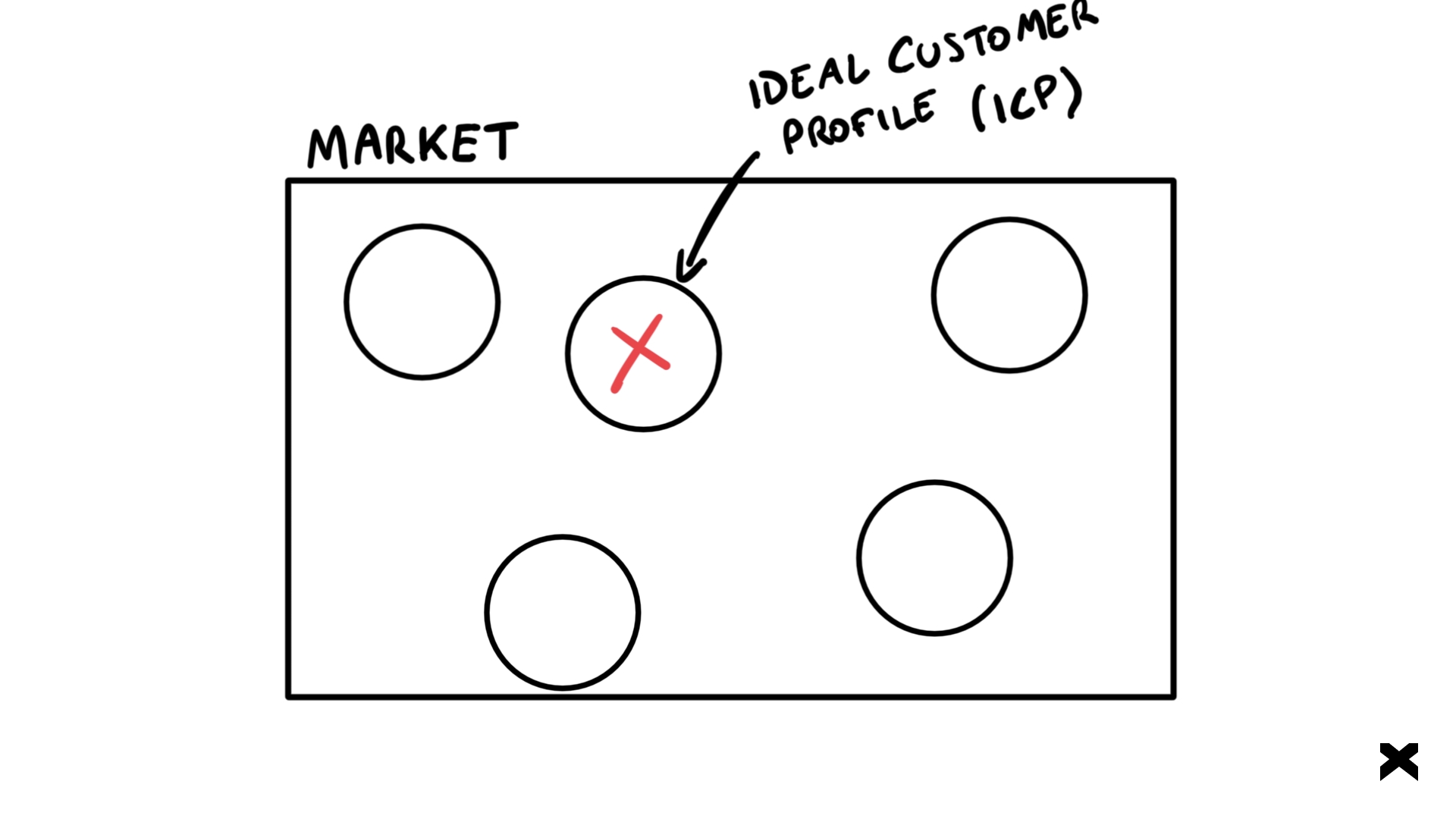
It’s not blurry like “small businesses” or “entrepreneurs.” It’s much more precise.
You define it using clear, observable criteria:
- How long they’ve been in business (e.g., 2–7 years)
- Their size (revenue range, number of employees, number of customers)
- The specific challenges they’re facing right now
- What they’ve already tried (and failed at)
- Where they are in their growth journey
- Their buying process and decision-makers
When you know your ICP, you stop chasing everyone.
You know exactly what the businesses in this group look like, so you can find more of them and speak to them in a way that feels like you read their minds.
Persona: The Actual Humans Making Decisions Inside Those Businesses
Even when you’ve found the perfect type of business (your ICP), there are still multiple people inside that business who influence or make the buying decision.
These are your personas.
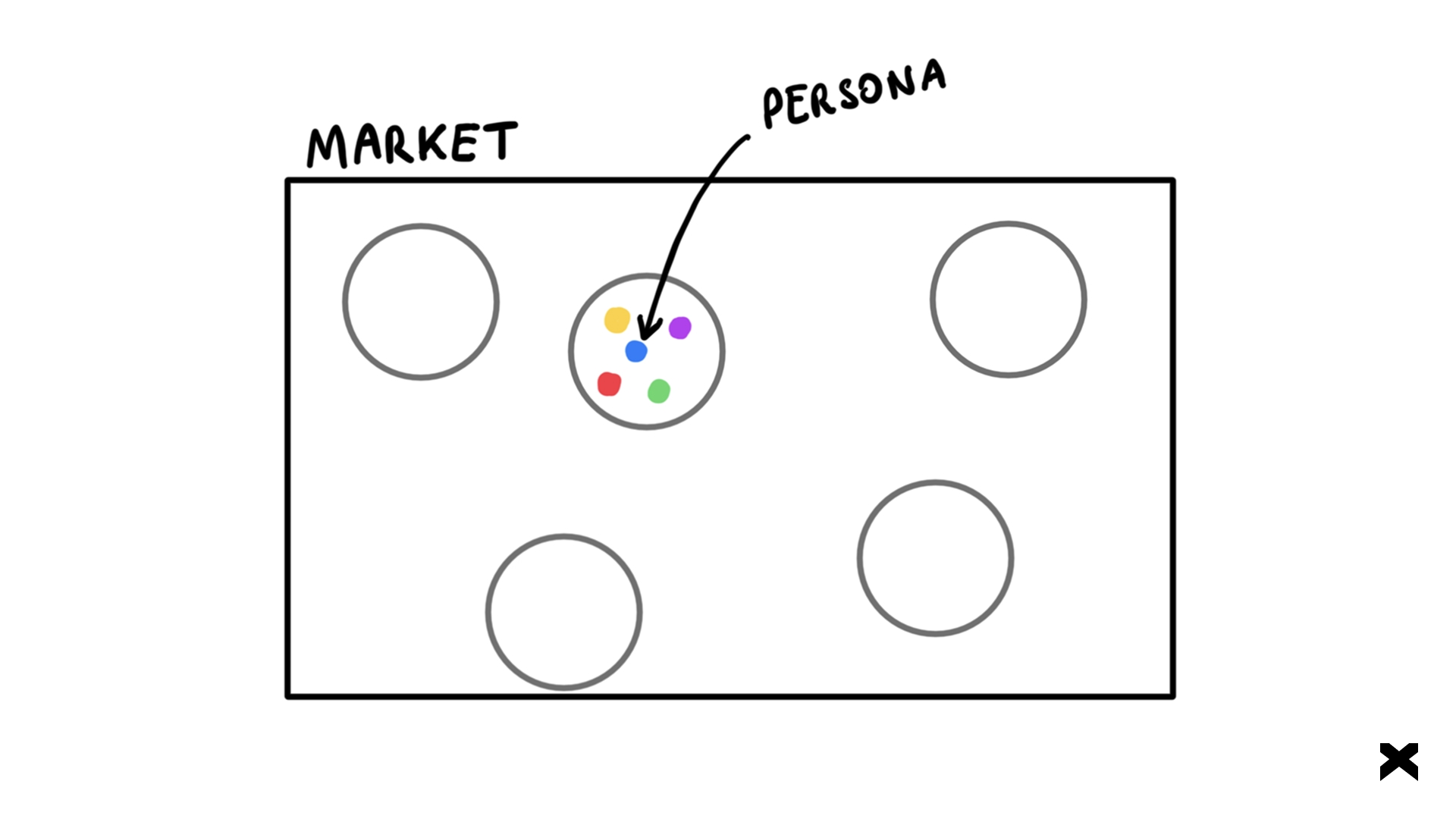
Examples of different personas inside the same company:
- The founder/CEO who controls the budget and has the final say
- The operations manager who will actually use your product or service every day
- The marketing lead who influences the decision and has to implement part of it
- The executive assistant who books the meetings and filters information
- The finance person who cares about ROI and cash flow
Each persona has completely different:
- Daily reality and pressures
- Biggest pains (what keeps them up at night)
- Desired outcomes (what “winning” looks like for them)
- Objections and fears (“I’ve been burned before”, “I don’t have time for this”, “My boss will never approve”, etc.)
- What they value most (speed, results, hand-holding, autonomy, proof, etc.)
If you only understand the business, but not the humans inside it, you’ll keep having conversations that go nowhere near your offer. You’ll talk about the wrong things to the wrong people.
Avatar = ICP + Personas
This is where it all comes together.
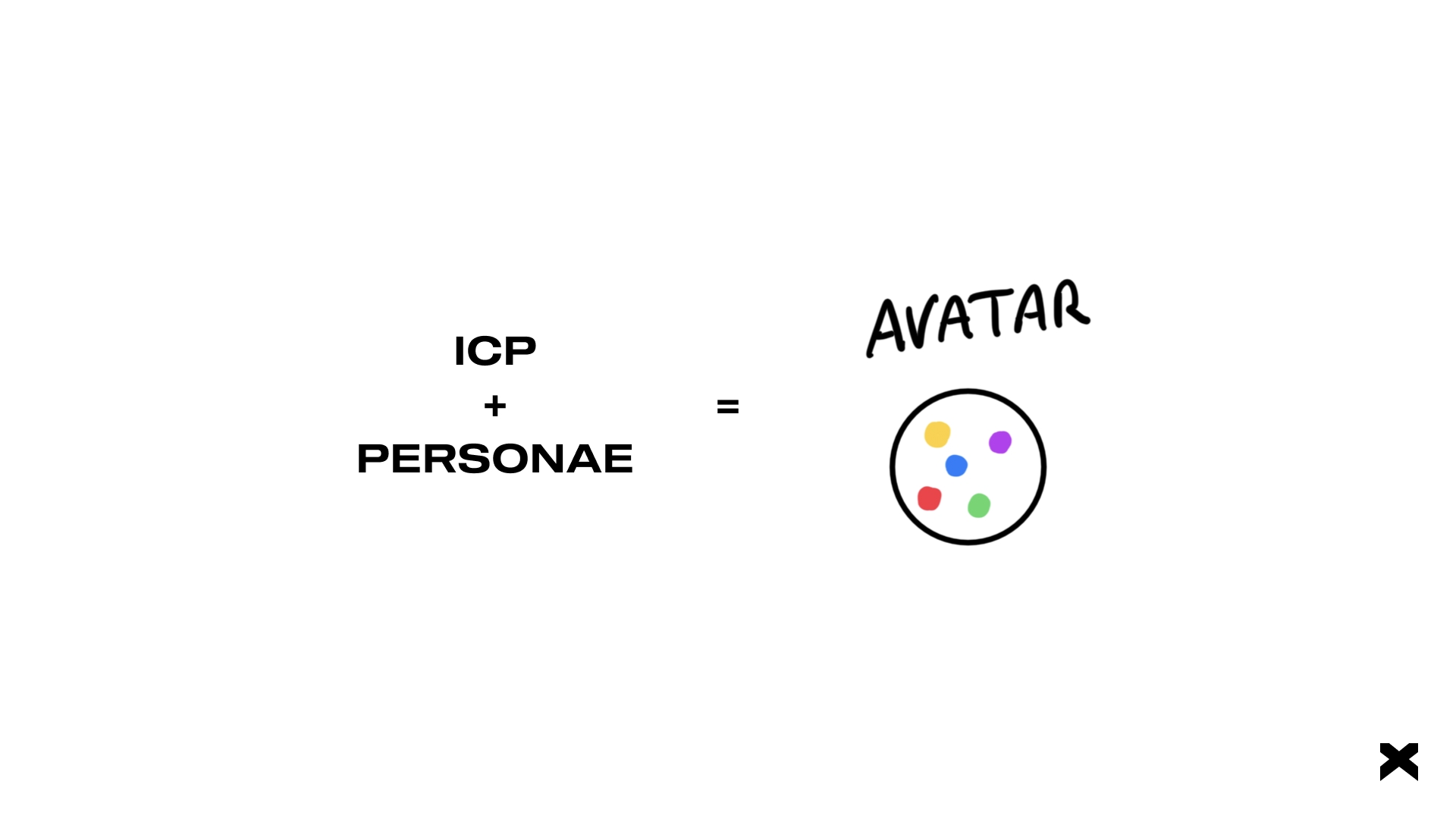
Your avatar is the complete, specific picture of who you’re actually targeting.
It combines:
- The Ideal Customer Profile (the type of business)
- The persona(s) (the specific humans inside that business you need to reach and influence)
When someone describes their avatar like this:
“My avatar is a 34-year-old bootstrapped Shopify store owner in France, 2–4 years in business, doing 400k–900k€ in revenue, overwhelmed by customer support tickets, and wanting to hire their first virtual assistant so they can finally take a real weekend off.”
...that’s a real avatar. It’s specific enough that you can:
- Find them
- Create content that feels written for them
- Build offers that solve their exact problems
- Speak in a voice that resonates immediately
Vague avatars produce vague results. Sharp avatars produce sharp marketing, better conversations, and clients who are a pleasure to work with.
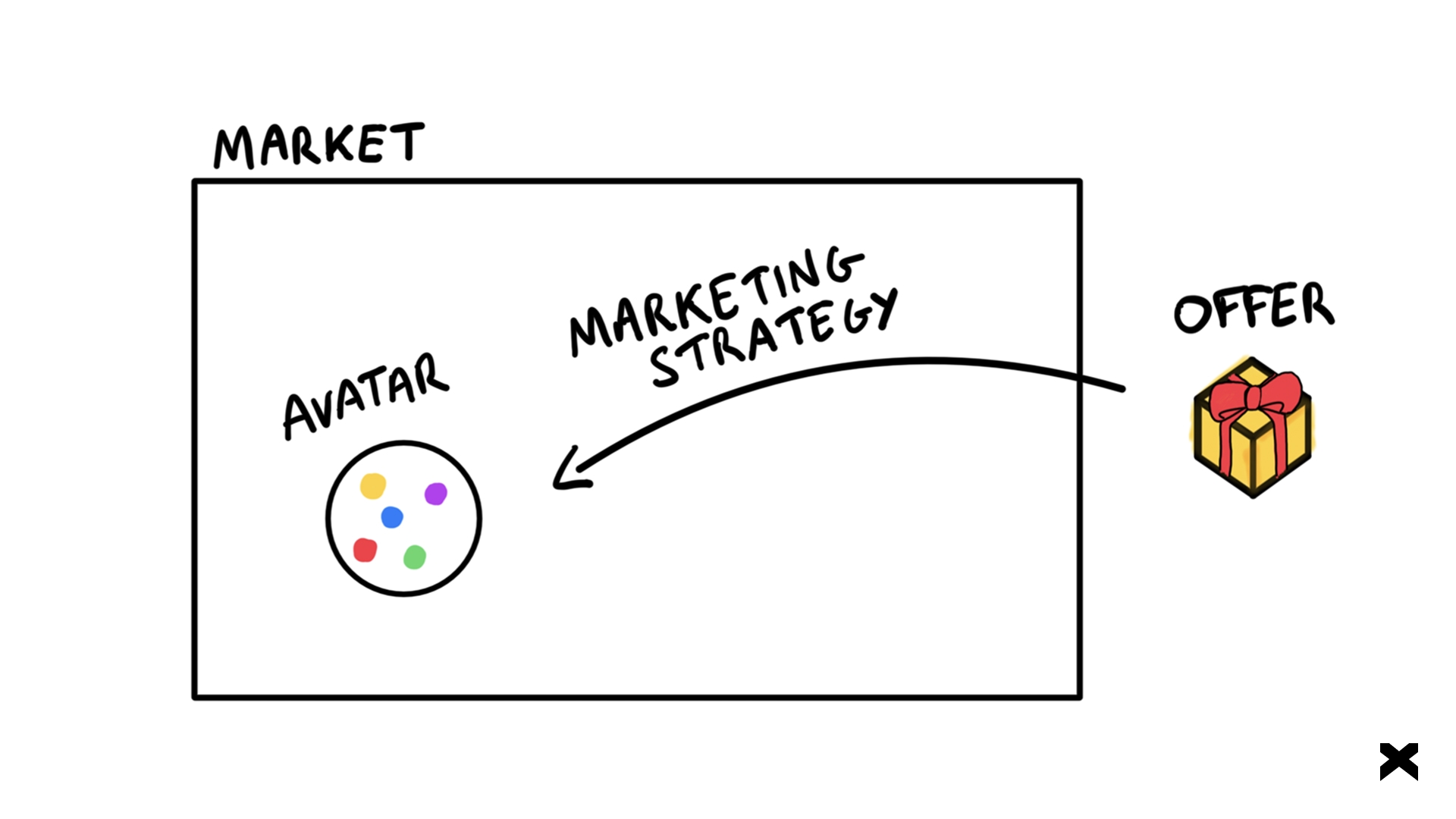
Your Offer: How You Make Them See the Value
Your offer isn’t just “I do business coaching” or “I build funnels.”
Your offer is the specific way you help your avatar get from their painful current reality to their desired future, and how clearly you can communicate that to them before they pay you.
When you deeply understand your avatar (ICP + personas), you can articulate:
- The exact problems they have right now
- The real cost of those problems staying unsolved (financial, emotional, time, opportunity)
- What life looks like after working with you
- Why your approach is different and better for them
This is what turns a cold or warm lead into an engaged prospect who sees your paid offer as the obvious next step.
Why This Foundation Changes Everything?
Most people skip this work.
They try to market to “entrepreneurs,” “small businesses,” or “anyone who needs X, Y, and Z.”
Then they wonder why:
- Their content gets ignored
- Their outreach gets no replies
- Their sales calls feel like pulling teeth
- They attract clients who are difficult and low-paying
When you do the work to clearly define:
- What a lead actually is
- Which group (ICP) do you serve best
- Which humans (personas) actually make decisions
- What your full avatar looks like
- How your offer creates obvious, specific value for them
...everything downstream gets dramatically easier.
- You stop guessing.
- You create better lead magnets.
- You write content that actually lands.
- You have sales conversations that convert.
- You build a business that attracts the right people instead of chasing the wrong ones.
This isn’t theory. This is the operating system.
Define it clearly. Test it in the real world. Iterate fast.
Everything else is just tactics built on top of this foundation.
Now go do the work. Your future clients are waiting for someone who actually understands them.