Choosing the perfect target is a follow-up decision to choosing your market and your niche. In this method, we assume you’ve already chosen your market and niche.
At this stage, we become more nuanced about who we serve and who we do not. Our goal is to define our target precisely so we can help them solve all their specific problems.
This is the direct application of what we’ve learned in “Avatar, Lead, ICP, Persona”.
Said differently, we will define a single avatar to help you singularly solve their particular problem and eliminate their most significant objections right from the start.
1. Form and Customer Survey
We start by gathering relevant information.
To draw up the ultimate profile, we need data.
So we create a form with specific questions, and we either:
- Send it to our current customers if we don’t have data about them
- Or fill it out ourselves if we already have the answers
The most crucial point is ensuring we have all the data we need so we can leverage as much helpful information as possible.
Protip: If you need current customers to give you the data, you can review it with them live on a call for stronger engagement.
Click here to reveal the survey
- Demographics:
- Who are they:
- Job title
- Role in the company
- Years of involvement
- Age
- Sex:
- Male
- Female
- Political affiliation
- Geographic location
- Digital location
- TikTok
- Discord
- Messenger
- Telegram
- Snapchat
- Slack
- Marital situation?
- Single - Couple - Married - Separated - Divorced - Widowed
- Business partnership status:
- Partnered in business - Solopreneur
- Who are they:
- Business stats before & current:
- # of employees
- Churn
- Pricing
- Products
- Customer lifetime value (LTV)
- # of customers
- Niche
- How long in business
- Total sales
- Cost of Goods Sold (COGS)
- Gross profit ⇒ Gross margins
- Aspirations:
- What was their goal upon purchasing your services/products?
- What problem were they trying to solve?
- Buying process:
- What’s the single biggest reason they bought?
- Was there a trigger event that caused them to buy?
- Did they consume any specific piece of content?
- Was there a specific testimonial they consumed?
- How many pieces did they consume?
- When did they first hear about you vs when they bought?
- Where did they first see us?
- Did someone refer them?
If you don’t have customers yet:
The best way to get started is to choose a target you know well from your past experiences. Once you’re big enough, you’ll need to conduct this survey as soon as you have a large customer base. For now, without accurate data from a customer survey, draw up your avatar based on your field experience.
For example, risk-averse VCs like Y Combinator invest in start-ups that know what they’re getting into. They choose companies based on their founders and the target these founders have chosen: the one they know best.
Serving the people you can best help is key to your company’s success. Later, when your pond gets too small, you can swim in deeper waters, but to start we need to stay as narrow as possible.
2. Identify Who Spends the Most
Rank the answers according to:
- the customers you like best, meaning they’re not a pain in the ass
- who spent the most
- who stayed the longest
Focus on the top 20%. Ignore the rest.
3. Let’s Find Their Similarities
List their 3-5 biggest shared qualifiers.
To do this, make a one-column table, a bullet point list, or a simple list like this one:
Shared qualifiers:
Qualifier 1, Qualifier 2, Qualifier 3, Qualifier 4, Qualifier 5, ...
4. Analyze. Learn. Execute.
First, from now on, we speak only the language of our avatar. Everywhere. All the time:
- Be upfront about your customer requirements.
- Make sure all advertising is aimed directly at them. We’ll repel the wrong customers and attract only the right ones.
- Stop selling to anyone who doesn’t meet our ideal customer criteria. Seriously, stop. Then, we double our efforts on the channels through which our specific avatar arrives.
Second, we redesign our sales process:
- Examine what drove our best customers to buy.
- Reverse-engineer their buying process. Then, we make it happen on purpose for all our future customers.
Laser Focused: ICP + Personas
Many people confuse ICPs with personas. The combination of both is an avatar.
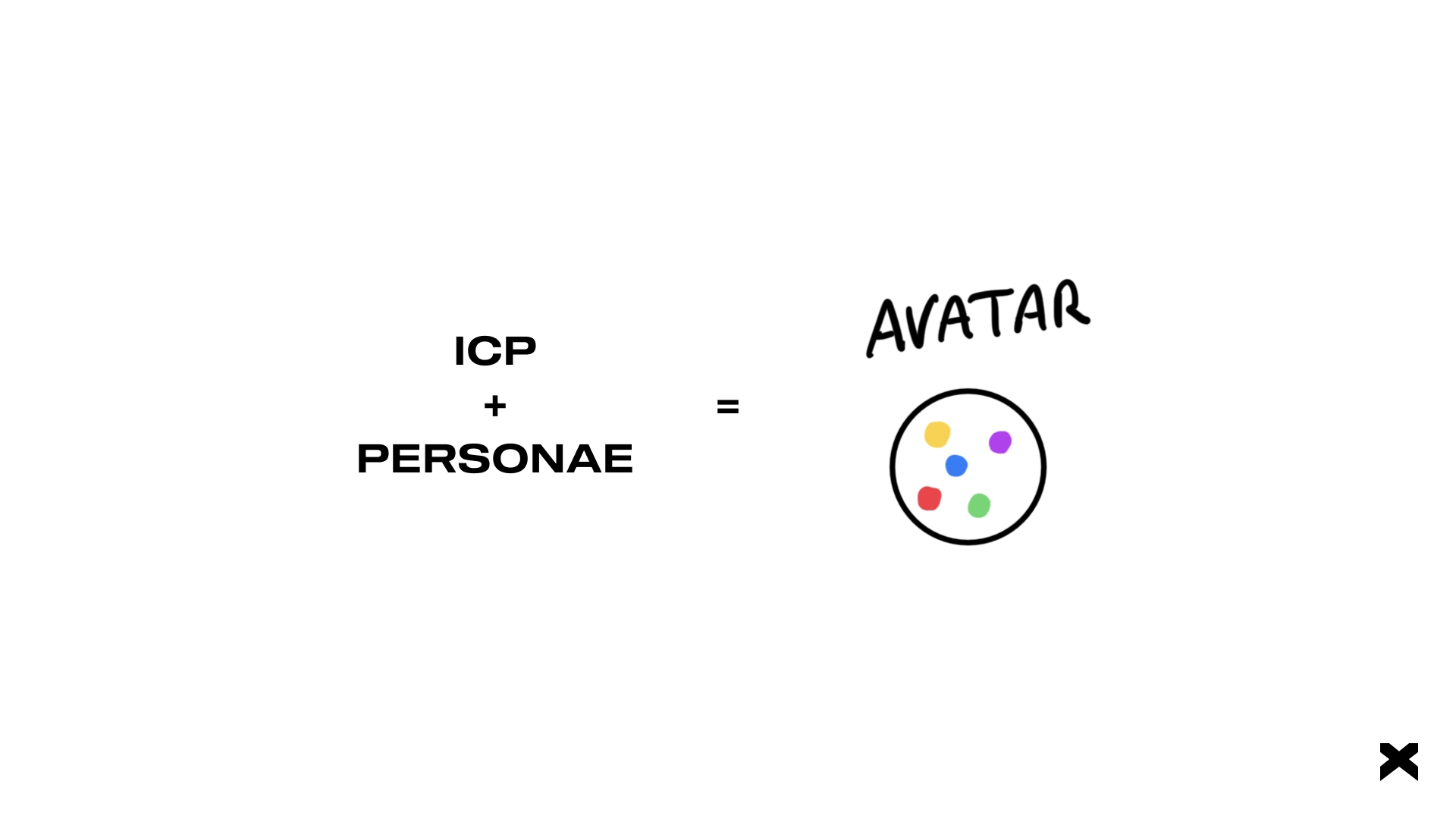
To learn the exact differences between the 3 of them, read “Avatar, Lead, ICP, Persona”. You need to understand this well to go further.
So, with the survey we did before, we have a lot of data about our avatar. Now we need to be even more precise and separate it into ICP + personas.
We make this distinction to understand in depth the customer we target and the different people who represent this customer.
TL;DR: skip this section if:
- You don’t have a huge ego
- Or if you’re NOT a designer, a salesperson, or a marketer.
As always, I already hear sales, marketers, and designers teams starting the endless ICP vs. persona debate.
This section is for you and your soon-to-be bruised ego.
Sales reps love talking about ICP, designers about personas, and marketers about buyer personas. They all talk about each one as if it were the answer to each and every problem they have in life.
Let’s royally shit these three professions’ opinions and put an end to this endless debate so they can finally agree with each other.
YOU NEED TO UNDERSTAND YOUR ICP AND ALL YOUR PERSONAS.
TOGETHER, THEY ALL FORM THE AVATAR YOU SERVE.
IF YOU DON’T, YOU’RE USELESS, AND YOUR BOSS SHOULD PERSONALLY FIRE YOU.
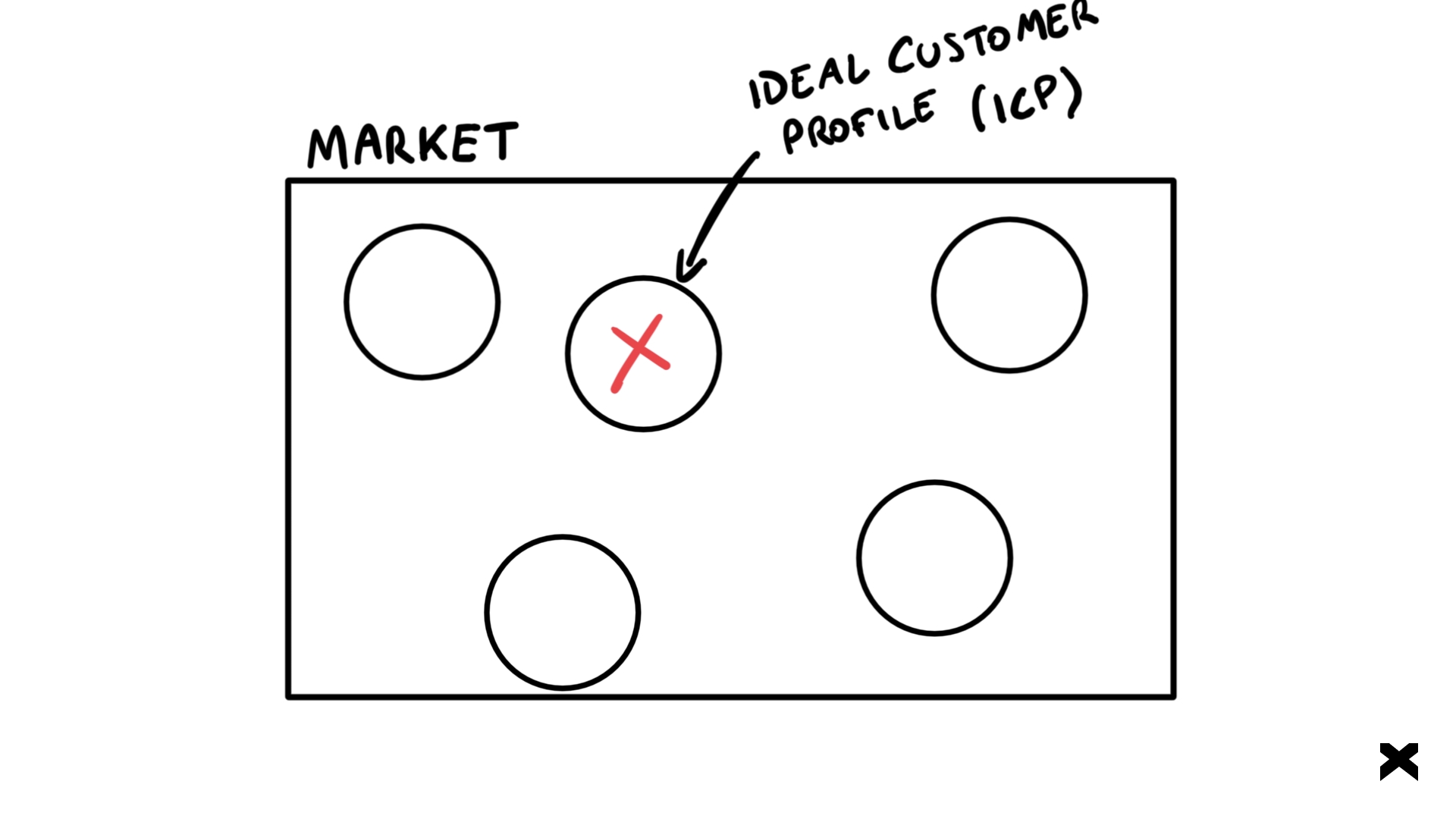
Here’s what an ICP looks like:
And now here are the personas in this ICP:
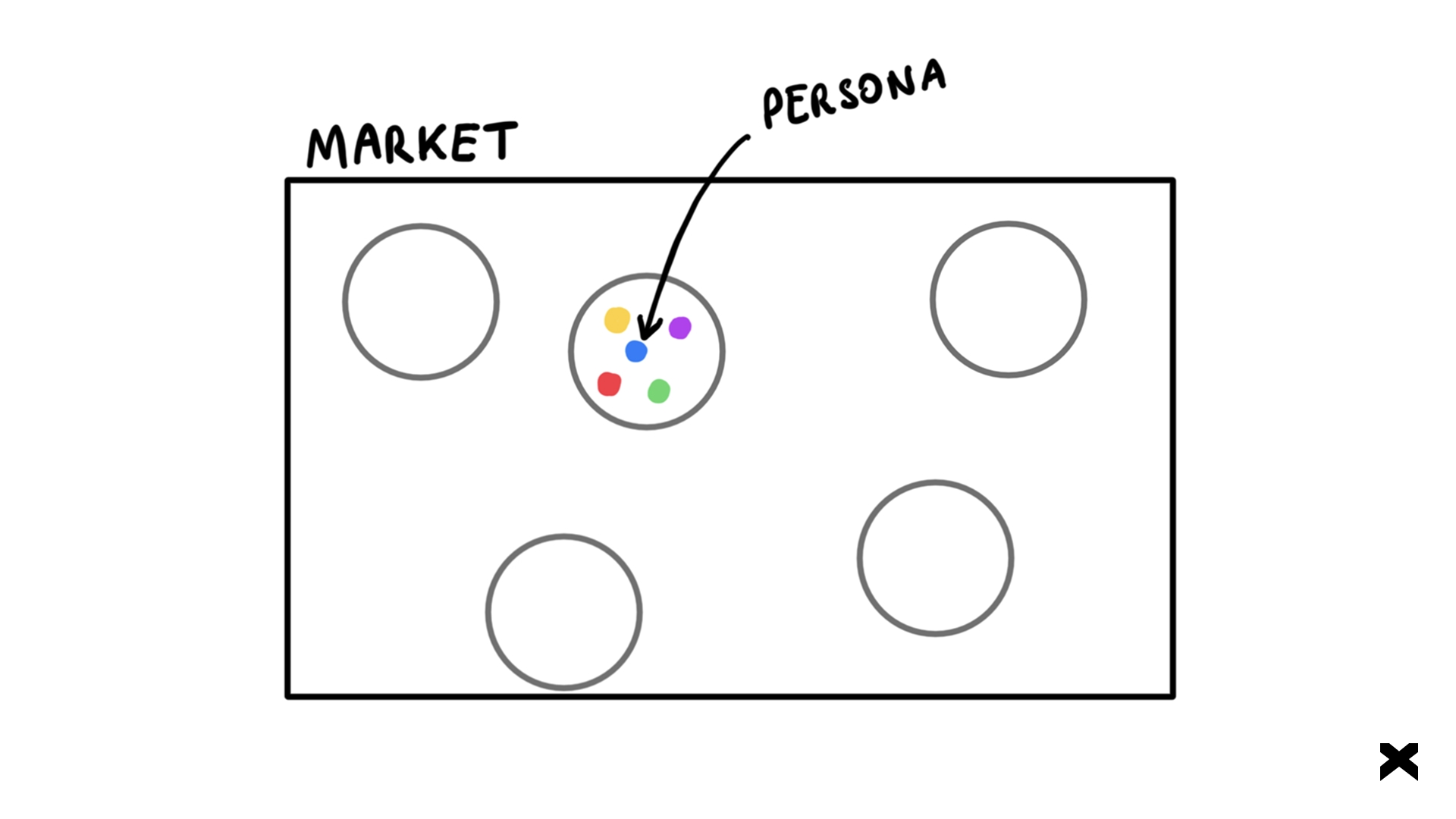
Serve them all or quit your job.
To do this, we’re going to draw up several profiles:
- Your brand’s ICPs
- Decider persona(s)
- Buyer persona(s)
- Initiator persona(s)
- User persona(s)
- Influencer persona(s)
- Gatekeeper persona(s)
The survey results we did earlier will help us draw up all these profiles with precision.
Below are all the criteria enabling us to draw precise and valuable profiles.
Beware, sometimes, a persona can fall into two categories. A buyer persona can also be a user. If either of these cases occurs, remember that it’s not bad; it’s just reality. Don’t worry, reality is never the problem. It’s always the solution.
Ultimate ICP
Here’s your new ICP template. It’s pretty straightforward and really useful in day-to-day life.
Click to reveal the ICP template
- The niche they’re in.
- Number of years they’re in business.
- Number of employees.
- Number of customers.
- Total sales.
- LTV.
- Churn rate.
- Their perceived problems.
- Their real problems.
Ultimate Personas
Here’s your new persona template. Simple, straightforward, and real-life-proof.
Click to reveal the persona template
- Related to [ICP Name].
- Type:
- Buyer
- User
- Influencer
- Decider
- Initiator
- Gatekeeper.
- Job title.
- Company role:
- Leader
- Management
- Worker.
- Years of involvement.
- Age.
- Sex: Male or Female.
- Political affiliation:
- Ultra right - Ultra conservative
- Right - Conservative
- Centrist - Sideliner
- Left - Progressist
- Ultra left - Ultra progressist
- Geographic location.
- Digital location:
- X
- TikTok
- Discord
- Messenger
- Telegram
- Snapchat
- Slack
- ...
- Marital situation:
- Single
- Couple
- Married
- Separated
- Divorced
- Widowed
- Business partners status:
- Partnered in business
- Solopreneur
- Hopes and dreams list.
- Pains and fears list.
- Barriers and uncertainties list.
- Buying reasons list.
- Goals upon purchasing list.